
How do you play with your newborn?

How do you play with a newborn, exactly? It’s something many parents wonder about in those first weeks and months. Your baby is tiny, sleeps a lot, and mostly seems to need rest and closeness. But the sweet surprise is: you can start playing from day one, in a way that fits your baby (and you). Not with busy activities or lots of toys, but with loving attention, gentle touch, and small moments that really matter.

Below, we’ll show you how to play with a newborn in a calm, natural way: how play builds connection, why it supports development, and what you can do month by month.
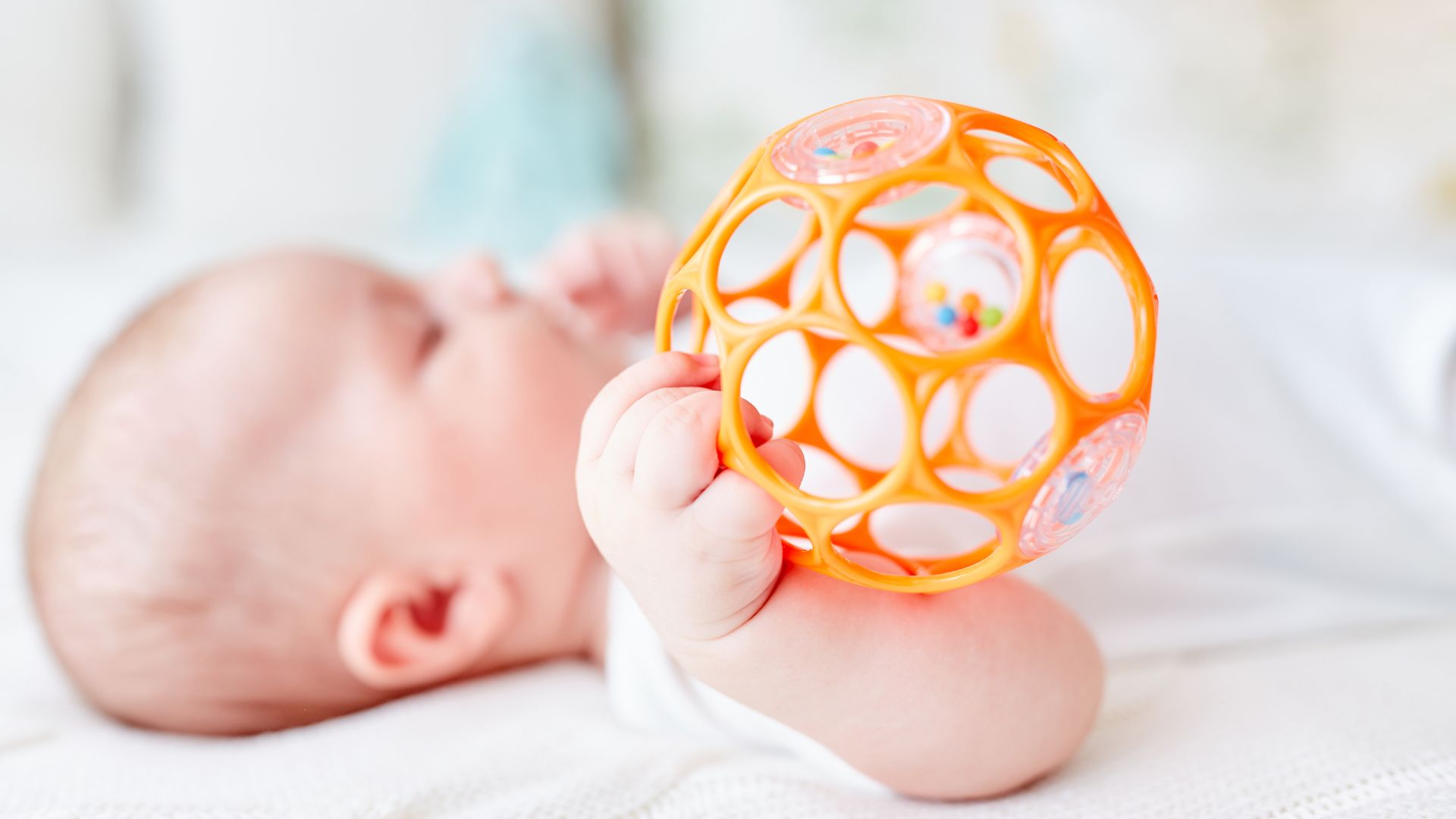
Playing with your baby starts earlier than you think

With a newborn, play isn’t about entertainment or “doing it right.” Play with a newborn can look like: making eye contact, talking softly, singing, cuddling, skin-to-skin time, and responding to little sounds and movements. Simple? Yes. Powerful? Absolutely.

This kind of play helps your baby learn who you are, what it feels like to be in their little body, and how the world works. It supports brain development and motor skills, but maybe most importantly, it helps build secure attachment. Your loving attention is the very best “toy” there is.

So if you’ve been asking yourself when should you start playing with newborn babies: the answer is… you already can. Day one is perfect.

How to play with a newborn from 0 to 1 month

In the first weeks, your baby mainly needs warmth, rest, and safety. You don’t have to create “activities.” Let your baby lie on your chest, sway gently, hum a calm song, or simply be together quietly. That counts. If you’re thinking, how to play with your newborn without overstimulating them, this is it.

You can also slowly show your face, move a finger gently, and see whether your baby follows with their eyes.

Fun fact: newborns don’t see clearly far away yet. They focus best at about 25- 30 cm (10–12 inches), basically the distance between your faces when you hold them. Moving your face slowly at that distance helps your baby practice focusing, strengthen eye muscles, and learn your features.

What to avoid right now? Too many stimuli, loud sounds, and flashy toys. Your baby learns mainly through you, so keep it close, soft, and predictable.

And yes, many parents ask: can newborns play with toys? A little bit, if it’s simple and gentle. Think of a calm music box or a soft musical cuddly toy. No need for more than that.

When should you be concerned?

It can look intense when your newborns little body bounces with every hiccup. And if it happens several times a day, you might start to wonder. But here’s the good news: frequent hiccups are generally normal, especially in the early months. There’s no such thing as “too many” hiccups unless there are other symptoms involved.

If your newborn gets hiccups a lot and seems restless, has trouble feeding while hiccupping, or shows other signs of discomfort, it’s a good idea to talk to your pediatrician. In rare cases, hiccups may point to an underlying issue, but for most newborns, they’re just a harmless reflex.

How to play with newborn babies from 1 to 2 months

You’ll likely notice your baby becoming more alert. They look at you more intentionally, start making small sounds, and you may even catch a first real smile.

Now there’s room for simple games: gentle peekaboo, showing high-contrast black-and-white books, or making funny faces. Your baby especially loves your voice, so sing, narrate what you’re doing, or whisper sweet words.

If you’re wondering how do you play with a newborn at this stage, think “short and sweet.” A few calm moments spread throughout the day work better than one long session with too many impressions. Watch your baby’s cues and build it up slowly.

How to play with a newborn from 2 to 3 months

More responses appear: more smiles, more eye contact, more sounds. Such a special phase.

Try little games like “cycling” their legs, gently counting toes, or looking in the mirror together. You can also start introducing very simple toys, like a soft rattle, if your baby seems interested.

Babies love repetition and rhythm. Motor development is moving fast, and your baby becomes increasingly curious about how you react. Keep play moments short, warm, and positive. Too much noise, flickering lights, or busy activities can quickly be overwhelming. Follow your baby and pause whenever needed.

Playing with attention and trust

In the first three months, play is mostly about connection: making soft sounds, skin-to-skin cuddles, singing quietly, moving your face slowly, and looking at your baby with love. These are the earliest forms of play, and they help your baby feel safe, bond with you, and develop their senses.

In our app, you’ll also find 70+ games tailored to your baby’s developmental stage. For each leap, you’ll get playful suggestions that match the new skills your little one is practicing, so you can support growth at exactly the right moment. No pressure. Just step by step, together.

Did this article help you?

Yes No

    Share this article