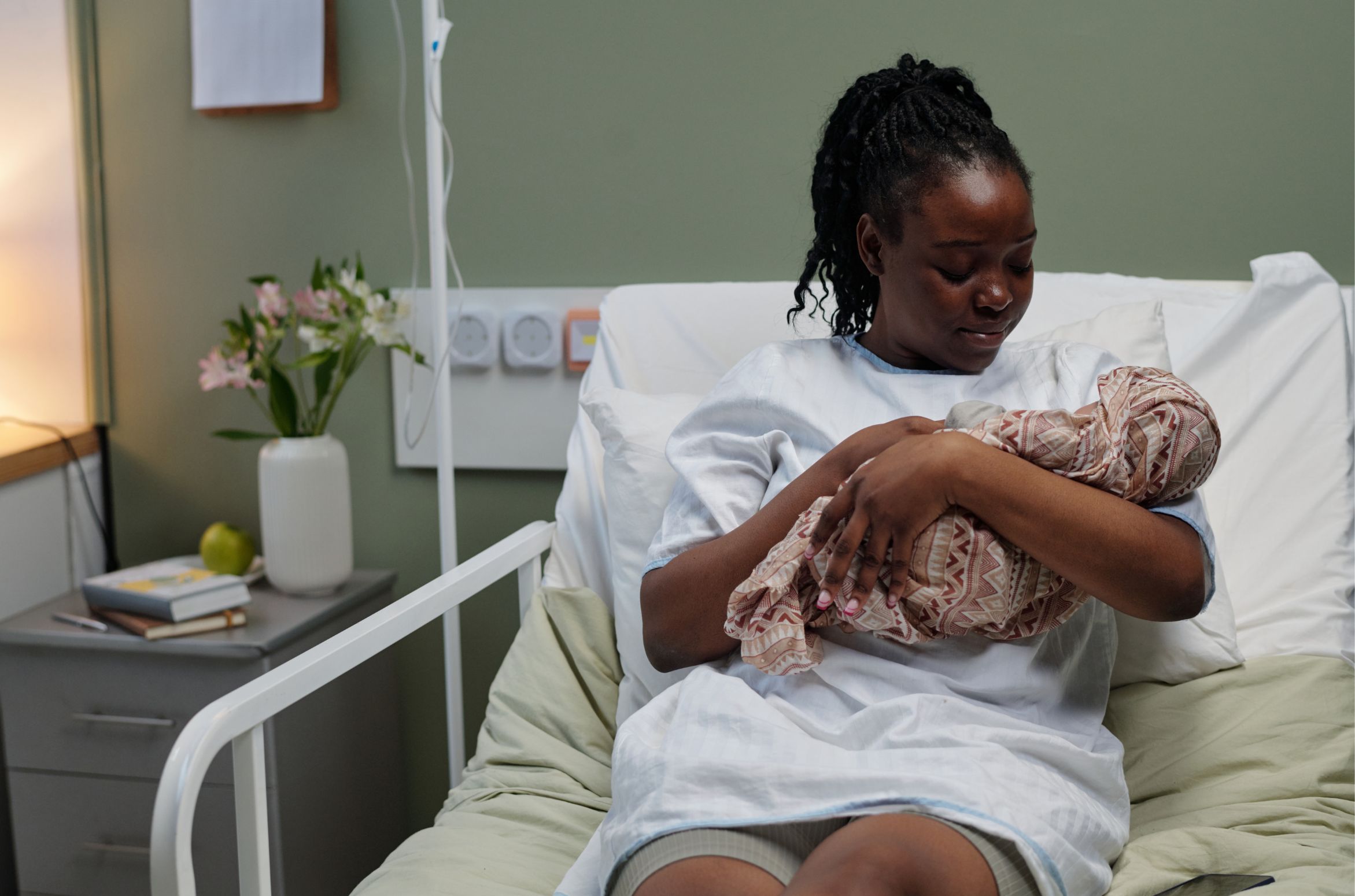
Medical pain relief is also an option, especially in a hospital setting. This may include an epidural for giving birth or other pain medication. An epidural during childbirth can significantly reduce pain and may help you regain energy if labor is long or exhausting. The options available to you depend on your health, your preferences, and where you are giving birth. During pregnancy, you can discuss epidural childbirth and other pain relief methods with your midwife or obstetrician. You may have a clear preference in advance. Or you may decide in the moment what feels right. Changing your mind during labor is always allowed.
When labor does not start on its own
Sometimes labor does not begin on its own. You may be past your due date, or there may be a medical reason not to wait any longer. That can take some adjustment, especially if you were hoping your body would start the process of childbirth naturally.
In some cases, your midwife or obstetrician may suggest a membrane sweep. During this procedure, the cervix is gently separated from the membranes with a finger. This can sometimes encourage labor to start, without immediately moving to a hospital admission or full induction of labor.
If that is not effective, or if there is a medical reason, induction of labor may be recommended. This means helping your body start giving birth with medical support. If you are wondering how to be induced, there are different methods. These may include medication to help the cervix soften and open, or medication that stimulates contractions. Induction of labor typically takes place in a hospital setting under medical supervision.
An induced labor can feel different from spontaneous labor. Contractions may build more quickly and can be stronger and closer together, which sometimes means additional support or pain relief is needed. Even so, the goal remains the same: a safe childbirth for you and your baby.
It can feel disappointing if things unfold differently than you expected, and that is completely understandable. Try to make space for what is happening now. This is still your childbirth experience, your story. And this path also leads to that first moment of meeting your baby.
When labor does not go as expected
No matter how well you prepare, labor usually does not follow a perfect plan. Sometimes childbirth unfolds differently than you had hoped. That can take some adjustment, especially if you had a clear picture of how giving birth would go.
In some situations, your baby may need a little extra help during birth. A doctor may recommend a vacuum assisted delivery or a forceps delivery. During these assisted births, your baby is gently guided out during a contraction using medical instruments. In certain cases, an episiotomy may also be performed to create a bit more space and support a safe delivery.
Sometimes a cesarean birth is necessary. This may be planned in advance, or it may be decided during labor if concerns arise about your health or your baby’s wellbeing.
It can feel overwhelming if your birth experience changes course. That is completely understandable. Try to remember that these decisions are never made lightly. They are made with one goal in mind: keeping you and your baby safe.